All posts by Thomas L. Knapp

A US War on Mexico Wouldn’t Win the US War on Drugs

Cartel violence in Michoacan. Photo by LaVerdad. reative Commons Attribution-Share Alike 4.0 International license.

“A violent drug cartel is suspected of leaving a severed human leg found hanging from a pedestrian bridge Wednesday in Toluca, just west of Mexico City,” CBS News reports. “[T]he trunk of the body was left on the street below, near the city’s center, along with handwritten signs signed by the Familia Michoacana cartel.”

Familia Michoacana, which apparently specializes in the production and distribution of methamphetamine, “has become known for carrying out ruthless, bloody ambushes of police in Mexico State and local residents in Guerrero” to protect its lucrative business.

Meanwhile, over the last several months, opportunistic US politicians have used increasing US drug overdose numbers linked to increasing use of fentanyl as an excuse to get an “invade Mexico to fight the cartels” bandwagon rolling.

Given the history of stupid US foreign policy ideas, it seems like it should be incredibly hard to come up with one that out-stupids the wars in Vietnam, Afghanistan, and Iraq combined, but with not so much as a “hold my beer” warning, these idiots seem to have managed it.

If any of those past fiascoes could be said to have had any saving graces at all, the main one was that they were conducted far, far away, versus enemies who lacked much ability to bring the war home to America.

Mexico, as you’re no doubt aware,  shares a 2,000-mile border with the US. Millions of people cross that border every year, with or without permission from or even detection by the US government. And the major cartels, as part of their drug distribution operations, already maintain a permanent presence in the US.

Any “war on the cartels” would be fought at least partly on US soil, and it would be fought by the kind of people who don’t quail from things like leaving severed human legs hanging from bridges to send their messages. Do we really want more of that kind of thing here? I have to ask, because sending US troops barging into Mexico is how we get things like that here.

The US government has been fighting — and losing — a “war on drugs” for most of a century now.

That war created the cartels.

That war empowers the cartels.

Expanding that war would unleash the cartels’ most vicious behaviors on US soil, while reducing unsafe drug consumption little if at all.

Legalizing drugs, on the other hand, would devastate the cartels’ profit and loss statements, put production and distribution of substances Americans obviously want into the hands of reputable/peaceable businesses, and reduce overdose deaths and other negative side effects of drug use by bringing standardized dosage and quality to American consumers.

Whose side are the “invade Mexico” demagogues on? Not yours.

Thomas L. Knapp (Twitter:@thomaslknapp) is director and senior news analyst at the William Lloyd Garrison Center for Libertarian Advocacy Journalism (thegarrisoncenter.org). He lives and works in north central Florida.

PUBLICATION/CITATION HISTORY
SCOTUS Rules For Free Speech, While Upholding Slavery

Slavery19

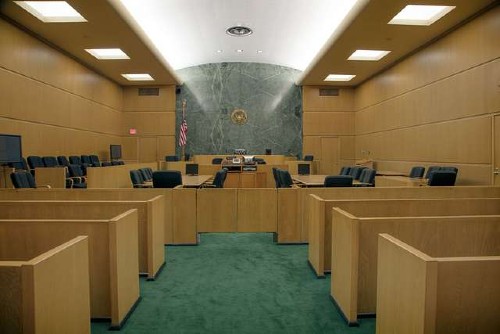
On June 30, the Supreme Court handed down its ruling in 303 Creative LLC v. Elenis. Lorie Smith, the court held, cannot be compelled to create web sites for same-sex weddings because that would require her to engage in speech “inconsistent with her belief that marriage should be reserved to unions between one man and one woman.”

The outcome is constitutionally correct as far as it goes. Associate justice Samuel Alito, writing for the majority, makes a strong argument for the ruling on First Amendment grounds. The state has no more authority to compel speech than it has to forbid speech.

Unfortunately, the opinion also includes a poison pill that sanctions continued violations of the Thirteenth Amendment’s prohibition on involuntary servitude, also known as slavery.

“[W]e do not question,” Alito writes, “the vital role public accommodations laws play in realizing the civil rights of all Americans.”

Public accommodations laws play no role whatsoever in realizing the rights of anyone, because no one has a right to purchase the services of someone who isn’t willing to serve.

The reasons why Person A might not want to serve Person B are irrelevant.

Such reasons could be, as in Smith’s case, about what Person B wants done. She’s willing to serve LGBTQ customers — but unwilling to engage in the particular speech of promoting their weddings.

Those reasons could also be about who Person B is. Person A might dislike Person B’s skin color, religion, sexual orientation, political affiliation, or any number of other characteristics, most of which seem silly (and possibly ugly).

But we all have the right to decide who we’ll do business with, even if our reasons are silly or ugly. Person A’s body, mind, time, and effort belong to Person A, not to Person B, until and unless Person A freely agrees to sell or rent those things to Person B.

Establishing a “protected class,” entitled to involuntary service on the part of others, makes that “protected class” a class of slave owners, and everyone else their slaves.

The court’s ruling doesn’t avoid that issue — it actively comes down on the side of Person B’s supposed “right” to enslave Person A.

Apart from the moral repugnance of that position, its negative consequences fall into a “seen versus unseen” chasm.

What we SEE in “public accommodations” laws is that a black family can rent a motel room from a racist; a same-sex couple can get a wedding web site or cake from a homophobe; a Jew can rent a venue for his son’s bar mitzvah from an anti-Semite.

What we DON’T see is that the bigotry remains, likely expressed in the form of poor service, over-billing, or any number of low-down dirty tricks to ruin the customer’s enjoyment of that service.

Slavery doesn’t really fight bigotry. It just hides bigotry.

What fights bigotry is freedom to associate or not, and the transparency that comes with letting bigots expose themselves so that they bear the financial and reputational costs of their revealed prejudices.

Thomas L. Knapp (Twitter:@thomaslknapp) is director and senior news analyst at the William Lloyd Garrison Center for Libertarian Advocacy Journalism (thegarrisoncenter.org). He lives and works in north central Florida.

PUBLICATION/CITATION HISTORY

Religious Freedom Isn’t About Employment “Accommodations”

Photo by Ed Uthman. Creative Commons Attribution-Share Alike 2.0 Generic license.

In 2019, Gerald Groff quit his job, then sued his employer for causing him “much anxiety and distress” by expecting him to show up for work and, after various attempts to accommodate his absenteeism (more than 24 missed shifts in two years), disciplining him when he didn’t.

If he’d sued because working on Sundays interfered with his enjoyment of a particular brunch buffet, or  his ability to keep up with the pro football season, we’d likely have never heard his name.

But his grounds for action were that a personal friend of his — an invisible friend whose very existence is hotly debated, but whose supposed opinions he values very much — doesn’t want him to work on Sundays, so his case made it all the way to the US Supreme Court.

On June 29, that court ruled that employers must provide “religious accommodations” to employees unless doing so “would result in substantial increased costs in relation to the conduct of its particular business.”

The costs, substantial or otherwise, increased or not, aren’t really the problem.

The problem is the treatment of such “accommodations” as an entitlement or right at all.

While it’s a stretch to say that we live in a free society these days, we do live in a society where we at least still enjoy the freedom to choose our employers. We can refuse any job we don’t want to do. We can quit any job we don’t like.

Employers should be similarly free to hire people who are willing to do a job, and to fire people who decide that they’re no longer going to do that job — even if those people claim that their very special invisible friends don’t want them to.

The First Amendment forbids Congress to make any law “respecting an establishment of religion, or prohibiting the free exercise thereof.”

There was never any question that Gerald Groff was free to exercise his religion as he chose.

Yes, he had to choose between his religious beliefs and any number of jobs that weren’t consistent with those beliefs. If he’d been a Muslim or a Jew, for example, he might have avoided jobs that involved cooking pork (or, as with his version of Christianity, working on certain days of the week). As a Hindu, jobs relating to the slaughter or preparation of beef would have been a poor fit. And so on, and so forth.

But we all have to make such choices, don’t we?

Unlike Groff, most of us don’t go to court to get our religions unconstitutionally established in law as trump cards that employers must “accommodate.”

But maybe we should, since according to the Supreme Court,  Gerald Groff’s sense of entitlement supersedes the First Amendment.

Thomas L. Knapp (Twitter:@thomaslknapp) is director and senior news analyst at the William Lloyd Garrison Center for Libertarian Advocacy Journalism (thegarrisoncenter.org). He lives and works in north central Florida.

PUBLICATION/CITATION HISTORY